
Walkways That Drain and Stay in Place
DG Paths in Santa Rosa for gardens and rural properties needing permeable, low-maintenance pathway surfaces
Decomposed granite pathways offer a natural-looking alternative to concrete or pavers where drainage, cost, and visual softness matter. The material consists of granite rock broken down into fine particles and smaller aggregate that compacts into a stable walking surface while allowing water to percolate through rather than running off. Brodie Castle Landcare installs DG paths for garden walkways, property access routes, and connectors between outdoor living areas across residential and rural sites in Santa Rosa, where the material's earth-tone appearance integrates well with native landscaping and informal design styles.
Decomposed granite paths address muddy routes that become impassable in winter, loose gravel that migrates into planted beds, and areas where impermeable hardscape would create unwanted runoff or visual hardness. Proper installation involves edge restraint, compacted base, and moisture-activated compaction of the DG layer itself to prevent loose material from tracking or washing away during heavy rain.
Request a free estimate to evaluate pathway routes and determine DG specifications for your site conditions.
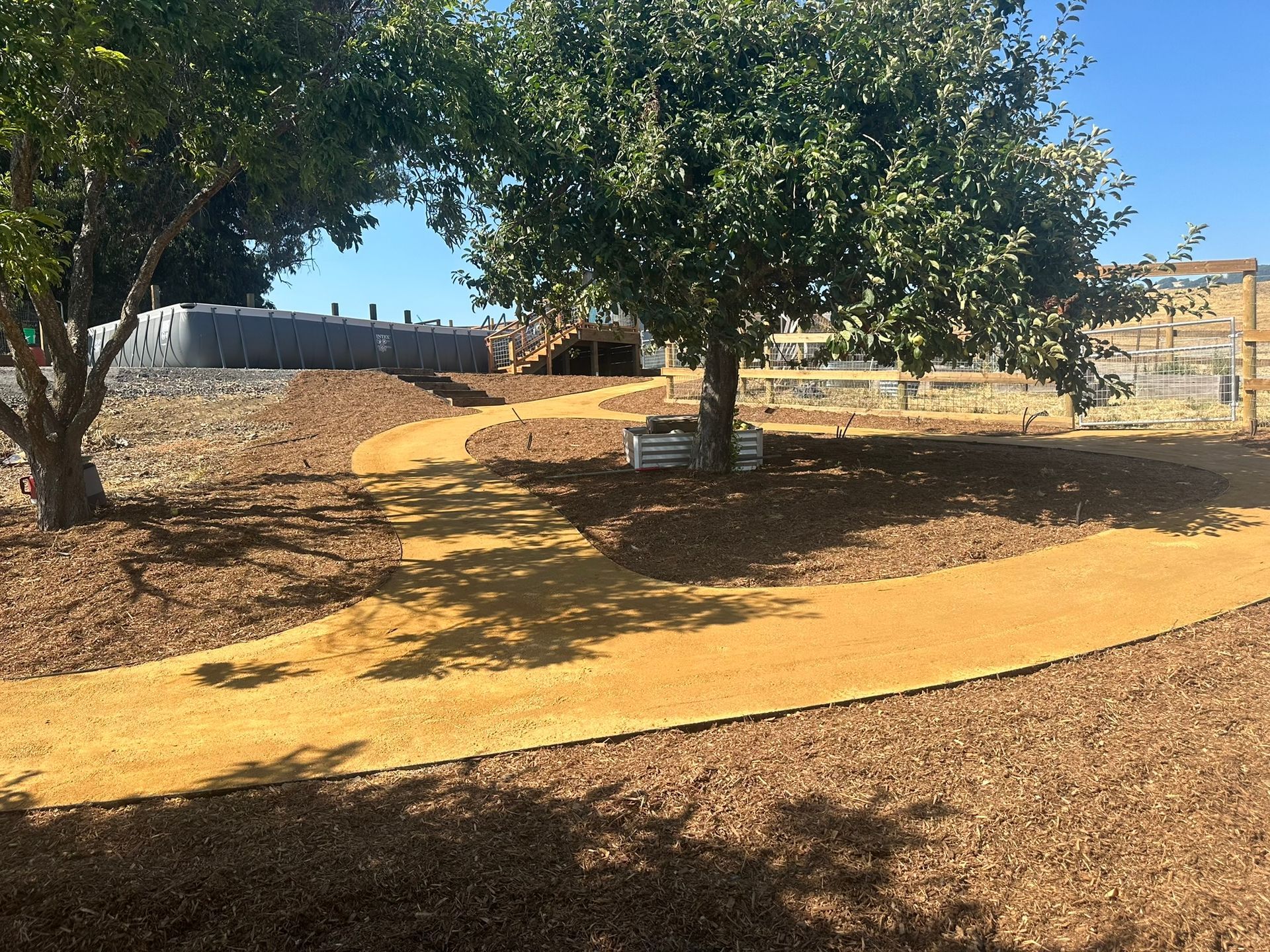
What You Notice Once DG Paths Are Finished
Installation starts with excavating the pathway to depth, installing a compacted aggregate base for stability, and setting edge restraints like steel, stone, or timber that prevent lateral spreading. Decomposed granite is placed in layers and compacted with water and mechanical tamping, with the final surface graded to shed standing water toward edges while maintaining permeability.
After installation, you'll walk on firm surfaces that don't shift underfoot, see clean edges that separate the path from adjacent planting beds, and notice water soaking into the path rather than pooling or running across it during storms. DG paths maintain a softer visual character than concrete while providing stable footing that doesn't degrade into mud or ruts, and they require only occasional releveling and edge trimming rather than the crack repair and pressure washing associated with traditional hardscape.
DG paths work best on relatively level or gently sloped terrain, as steep grades can experience material migration during heavy runoff. The material compacts most effectively when moisture content is controlled during installation, making late spring or early fall preferable to summer's dust or winter's saturation.
Common Questions About This Service
Clients considering decomposed granite want clarity on how the material performs, how it compares to other pathway options, and what maintenance it requires over time.
What makes decomposed granite different from regular gravel?
DG contains fine particles that lock together when compacted, creating a semi-solid surface rather than the loose, shifting texture of pea gravel or drain rock that never stabilizes underfoot.
How long do DG paths last before they need attention?
Paths installed with proper base and edge restraint typically require only minor surface releveling every few years, though high-traffic areas or slopes may need topdressing sooner if material compresses or migrates.
Will decomposed granite track into the house or stick to shoes?
Properly compacted DG surfaces release minimal loose material, though some fine dust may attach to wet shoes during the first few weeks after installation until rainfall and use fully settle the surface.
What edge options work best for DG pathways in Santa Rosa?
Steel edging provides clean lines and long-term durability, while stone or wood edges offer a more natural appearance that suits informal garden settings and rural properties.
How does DG handle the wet winters and dry summers typical in Northern California?
The material drains well during winter rains, preventing the standing water and mud common with compacted soil paths, and it resists cracking or heaving during summer heat unlike concrete or asphalt surfaces.
Brodie Castle Landcare focuses on edge detail and proper compaction during installation to deliver paths that remain visually clean and functionally stable. Schedule a free estimate to discuss pathway layout, material color options, and integration with your existing landscape features.