
Water Flow Managed Before Damage Happens
Drainage in Santa Rosa for properties where winter runoff threatens foundations and landscape health
Pooling water after storms signals inadequate drainage that slowly undermines foundations, saturates planting beds until roots rot, and turns usable yard space into muddy zones for weeks following rainfall. Northern California's pattern of intense winter precipitation followed by dry summers means drainage systems must handle concentrated flows during wet months without creating erosion channels or overwhelming outlets. Brodie Castle Landcare designs and installs drainage solutions across Santa Rosa properties where clay soils shed water poorly, grading directs runoff toward structures, or seasonal springs emerge in low areas and saturate ground that never fully dries.
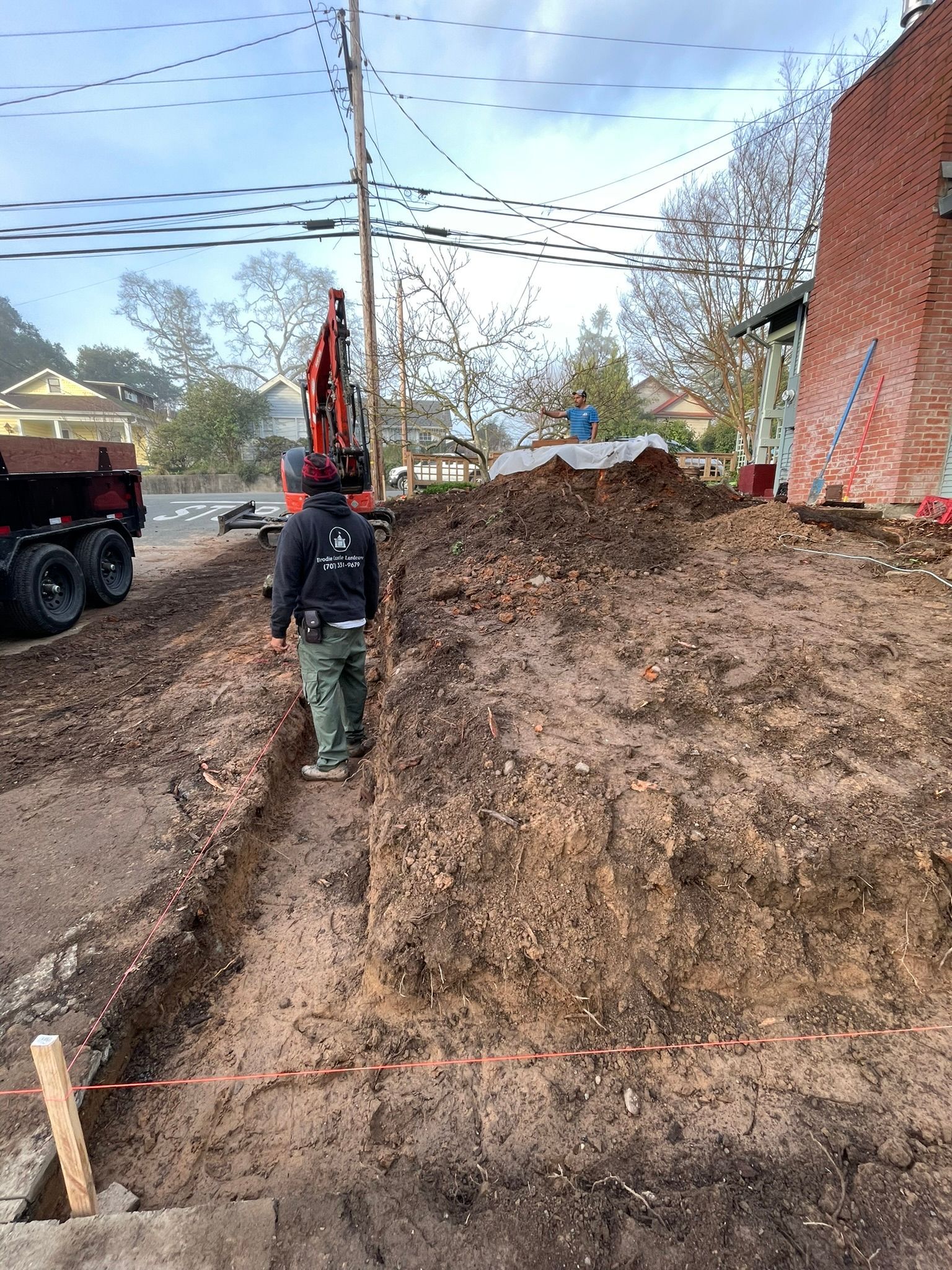
Effective drainage work involves mapping how water moves across the property during heavy rain, identifying collection points where it accumulates, and creating paths that redirect flow to appropriate outlets—swales that slow and spread runoff, French drains that intercept subsurface water, or surface channels that carry volume away from vulnerable areas. Installation includes grading adjustments to eliminate depressions, placing perforated pipe in gravel-filled trenches, and ensuring outlets discharge where additional water does not create new problems downstream.
Request a free estimate and site inspection to identify drainage issues affecting your property's structures and landscape.
How Drainage Addresses Water Movement Problems
Proper solutions begin with observing actual water behavior during storms, not assuming flow patterns based on visible topography alone—subsurface hardpan layers and soil compaction redirect water in ways surface grades do not reveal. French drains are positioned upslope of problem areas to intercept water before it reaches foundations or saturates planting zones, with perforated pipe surrounded by gravel that filters soil particles and maintains flow capacity. Surface drains use catch basins at low points connected to solid pipe that carries water to daylight outlets or infiltration areas where soil absorbs it without flooding.
Once systems function, you notice yards that dry out within days after heavy rain instead of remaining soggy for weeks, foundations that stay free of moisture staining and soil settlement, and planting beds where root health improves as waterlogged conditions resolve. Hardscape surfaces no longer develop standing puddles, and erosion channels stop forming where concentrated flows previously scoured soil.
Drainage installation includes excavation, pipe and gravel placement, grading adjustments, and outlet configuration. It does not include foundation waterproofing or repair of existing structural damage, though coordination with construction projects integrates drainage planning early when grading changes are simpler to implement. System design accounts for future landscape or hardscape additions that might alter water flow patterns.
Questions Before Starting Your Project
Drainage systems require understanding site-specific water movement and soil characteristics that determine which solutions address problems effectively.
What causes water to pool in specific areas?
Compacted subsoil from construction traffic, clay layers that block downward percolation, grading that creates bowls or directs runoff toward rather than away from structures, and high seasonal water tables all contribute. Properties in Santa Rosa's valley floor often deal with shallow clay hardpan that prevents infiltration even when surface grades appear adequate.
How does French drain installation prevent future saturation?
Trenches filled with gravel and perforated pipe intercept subsurface water moving downslope before it reaches problem areas, collecting flow and redirecting it to outlets. Gravel maintains pore space around pipe even as soil settles, and filter fabric prevents silt from clogging the system over time.
When should drainage work happen relative to other projects?
Installing drainage before final grading, hardscape, or planting allows trenching and pipe placement without disturbing finished work. New construction benefits from integrating drainage during initial site work when heavy equipment access is open and grading adjustments cost less than retrofitting later.
What outlet options work when no downhill discharge point exists?
Dry wells or infiltration basins collect water in gravel-filled chambers where it gradually percolates into surrounding soil, though they require adequate soil absorption capacity and separation from foundations. Properties with extremely poor drainage may need pumped discharge to reach suitable outlets.
How often do drainage systems require maintenance?
Properly installed systems with appropriate slope and filter fabric typically function for years with minimal intervention, though outlets should be checked annually to ensure debris has not blocked flow, and surface grates need clearing after storms to prevent sediment from entering pipes and reducing capacity.
Brodie Castle Landcare evaluates drainage problems based on actual site conditions and seasonal water behavior, not generic solutions applied without regard for soil type or flow patterns. Contact us for a free estimate and inspection to map water movement issues and review effective correction strategies.