
Landscapes Built Around What Actually Grows Here
New Plantings in Santa Rosa for properties where soil conditions and climate demand site-appropriate plant selection
Plantings fail when root balls sit in amended soil pockets surrounded by incompatible native earth, or when nursery stock selected for appearance arrives without regard for sun exposure and winter chill hours the site delivers. Brodie Castle Landcare installs plants across Santa Rosa properties after evaluating drainage patterns, sun angles through seasonal shifts, and whether existing soil leans toward the heavy clay common in valley floors or the thinner decomposed granite found on hillsides. Proper establishment depends on matching species to conditions rather than forcing preferences into environments that stress them from installation forward.
The process involves preparing planting beds by loosening compacted subsoil, integrating compost to improve structure without creating drainage barriers, and spacing plants to account for mature canopy spread. Installation timing follows seasonal windows—fall planting allows root development during cool, wet months before summer heat arrives, while spring installation works for species that need warmth to establish. Native and low-water plants suited to Mediterranean climates reduce long-term maintenance and irrigation dependency once root systems reach beyond the original planting zone.
Request a free estimate and planting plan tailored to your property's specific exposure and soil characteristics.
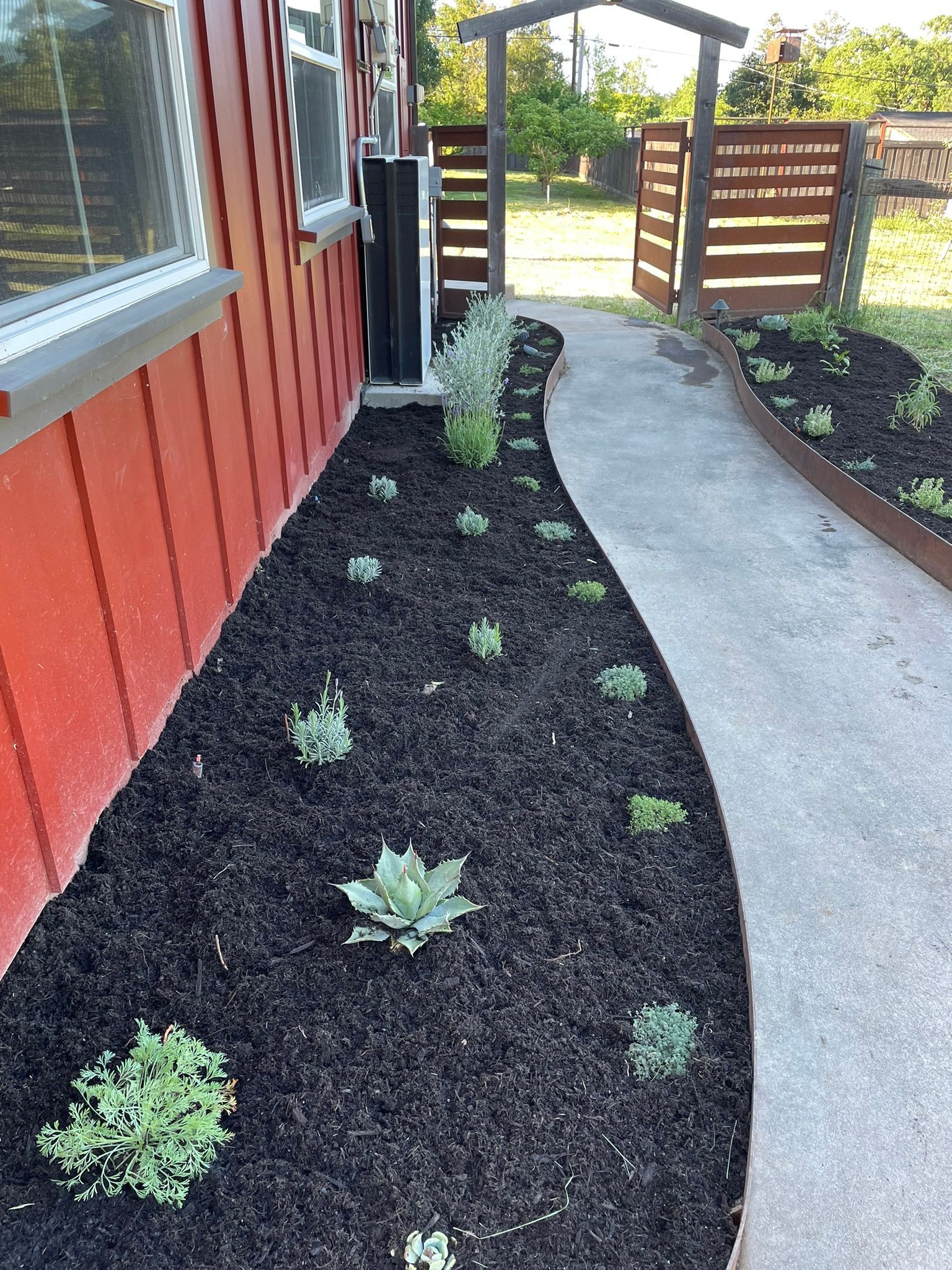
Why Proper Plant Establishment Works for Long-Term Success
Successful installation begins with site preparation that addresses compaction and drainage before anything goes in the ground. Holes are dug wider than root balls to encourage outward growth, but not deeper—planting below grade in clay soils creates bowls where water collects and rots roots. Mulch layers stabilize soil temperature and retain moisture without piling against trunks where decay starts. Spacing accounts for growth rates so shrubs don't crowd into each other within three years or block windows as they mature.
After planting completes, you see beds that look intentionally designed rather than randomly dotted, with layered heights and foliage textures that fill in as plants expand. Seasonal color appears when species bloom in sequence rather than everything peaking simultaneously then going dormant. Watering needs decrease each year as roots extend into surrounding soil instead of remaining dependent on supplemental irrigation indefinitely.
The service includes layout planning, soil amendment, plant installation, and initial mulching. It does not include ongoing maintenance or irrigation system installation, though coordination with existing or planned watering infrastructure ensures new plantings receive appropriate coverage. Guidance on care during the first growing season helps establish routines that support root development without overwatering.
Answers to Frequent Service Questions
Plant selection and timing decisions affect how quickly landscapes mature and how much intervention they require going forward.
What determines which plants work for a specific site?
Sun exposure duration, soil drainage speed, protection from wind, and microclimate variations across the property—a south-facing slope in Santa Rosa experiences different heat load and moisture loss than a shaded north side, and plant choices must reflect those differences rather than applying one palette across the entire yard.
How does seasonal timing affect plant establishment?
Fall installations allow root growth during winter rains before summer heat stress arrives, giving plants months to anchor before they need to support active top growth. Spring planting works for species that require warmth to establish but demands more consistent supplemental watering through their first dry season.
When should native plants be prioritized over traditional landscape species?
Properties with limited irrigation capacity, slopes where runoff occurs, or areas left mostly unmanaged benefit from natives adapted to local rainfall patterns and soil chemistry. Traditional ornamentals work better in high-visibility beds where appearance standards justify ongoing water and care input.
What spacing prevents crowding as plants mature?
Most shrubs should sit at distances equal to half their expected mature width from structures or other plants, which often means installations look sparse initially but fill in appropriately within two to three growing seasons without requiring removal or severe pruning to correct overcrowding.
How long before new plantings look established?
Visible canopy growth and flowering typically appear in the second season after roots have extended beyond the planting hole, though establishment continues for three to five years as root systems spread and plants adapt fully to site conditions rather than relying on installation amendments.
Brodie Castle Landcare matches plant selection to the conditions your property actually provides rather than imposing species that require constant intervention. Schedule a free estimate to map planting zones and review options suited to your landscape goals and site realities.