Finished Surfaces That Hold Up to Use
Turf and Artificial Turf in Santa Rosa for yards where uneven ground or failed grass creates unusable outdoor space
Ground preparation determines whether turf installations stay level and drain properly or develop low spots where water pools and surfaces turn muddy. Brodie Castle Landcare handles both natural sod installation and artificial turf projects across Santa Rosa properties where existing lawns have died out in patches, irrigation costs make natural grass impractical, or new construction leaves rough grading that needs finished surfaces. The difference between installations that last and those that fail within two seasons comes down to subgrade stability, drainage integration, and whether materials match the use patterns the space will see.
Natural turf installation involves grading to eliminate dips and humps, amending soil to support root development, and laying sod during cool months when root establishment happens before heat stress arrives. Artificial turf requires removing existing material down to stable subgrade, adding crushed aggregate base compacted in lifts, installing permeable backing, and securing seams so traffic does not shift sections. Both approaches demand attention to edge details where turf meets hardscape and drainage outlets that prevent water from undermining the base.
Request a free estimate to compare natural and synthetic options based on your property's drainage and intended use.
What Changes After Installation Completes
Proper installation begins with stripping unstable topsoil and compacting base material in layers, not dumping aggregate in one pass and smoothing the top. Grading slopes away from structures at measurable rates—typically one percent minimum—so surface water moves toward drainage points rather than pooling. For artificial turf, infill material gets brushed into fibers to weight them upright and provide cushion, while natural sod receives initial deep watering to bond roots with underlying soil.
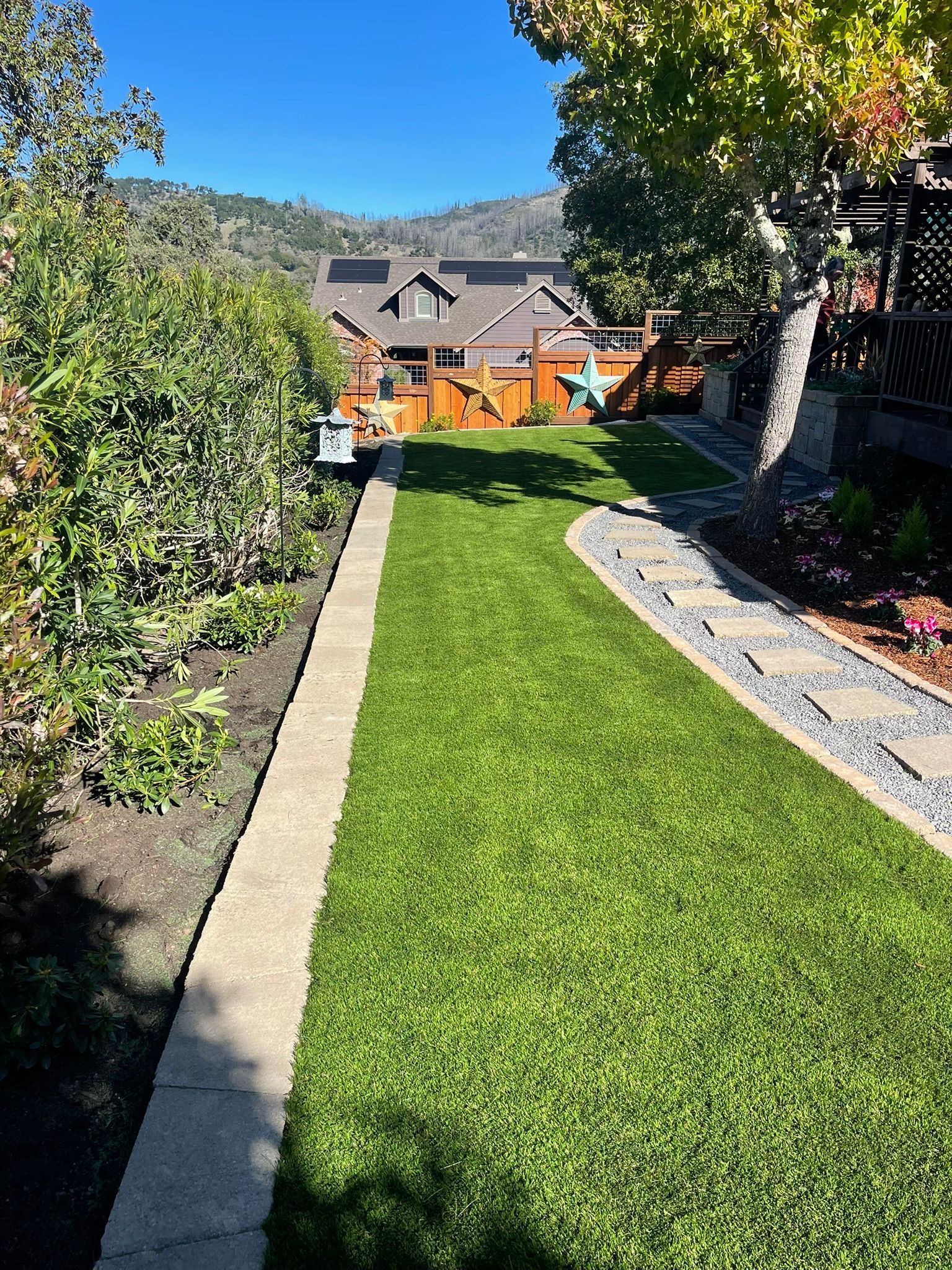
Once complete, you notice even surfaces without the ankle-turning dips or spongy spots that appear when base preparation gets rushed. Artificial installations drain quickly after rain instead of holding water on the surface, and seams stay invisible rather than separating into visible gaps. Natural sod greens uniformly as roots knit into amended soil, and mowing patterns stay consistent without scalping high areas or missing low sections.
The service includes ground preparation, base installation, and turf placement with initial securing or watering. It does not include irrigation system installation for natural turf, though coordination with existing or planned watering ensures coverage matches the installed area. Artificial turf projects include edge restraints and permeable backing; natural sod installations provide guidance on watering schedules during the establishment period.
Common Questions About This Service
Turf decisions depend on understanding site conditions and maintenance expectations beyond the initial installation.
What ground conditions require additional base preparation?
Areas with clay soil that drains poorly, sites where previous grading left soft spots, and slopes steeper than ten percent need extra aggregate depth or terracing to prevent settlement. Properties in Santa Rosa with expansive clay may require thicker bases and positive drainage to avoid surface warping during wet seasons.
How does artificial turf perform compared to natural grass?
Synthetic surfaces eliminate mowing, fertilizing, and ongoing watering but require periodic brushing to keep infill distributed and fibers upright. They handle heavy foot traffic better than natural turf and stay green year-round, though surface temperatures rise higher in direct sun during summer months.
When is natural sod preferable to artificial alternatives?
Properties where kids and pets spend significant time benefit from the cooler surface temperatures and softer feel of natural grass. Sod also integrates visually with surrounding landscape plantings more seamlessly than synthetic materials, though it demands regular irrigation and seasonal maintenance.
What base materials prevent turf from settling unevenly?
Crushed rock compacted in two-inch lifts creates stable support that resists shifting under traffic or moisture changes. Decomposed granite works for light-use areas but compacts less reliably under repetitive load, and sand bases drain well but lack the structural stability needed where vehicles or equipment cross the surface.
How long does artificial turf last in typical residential use?
Quality installations with UV-stable fibers and proper drainage typically maintain appearance and function for twelve to fifteen years before fibers mat down or backing deteriorates, though high-traffic zones along walkways or play areas may show wear sooner and require patching.
Brodie Castle Landcare builds turf installations on stable bases that prevent the settling and drainage problems common when preparation gets shortcut. Contact us for a free estimate comparing options suited to your site conditions and how the space gets used.