
Overgrown Land Cleared for Access and Safety
High Weed Mowing in Santa Rosa for neglected lots where thick vegetation creates fire hazards and blocks property use
Thick stands of dry grass, thistles, and brush accumulate quickly on unmanaged properties, particularly after wet winters give way to Northern California's extended dry season. Brodie Castle Landcare uses heavy-duty mowing equipment designed for rough terrain and dense vegetation that standard residential mowers cannot handle. The service restores access to lots, fields, and perimeter areas where overgrowth has made walking dangerous or fire risk unacceptable.
High weed mowing cuts through vegetation often exceeding three feet in height, including fibrous grasses, woody stems, and mixed volunteer growth that establishes in unused areas. Equipment selection depends on slope, debris density, and whether the goal involves simple knockdown or repeated cutting to exhaust root systems over multiple visits.
Request a free estimate and site evaluation to determine equipment needs and access routes for clearing your overgrown property.
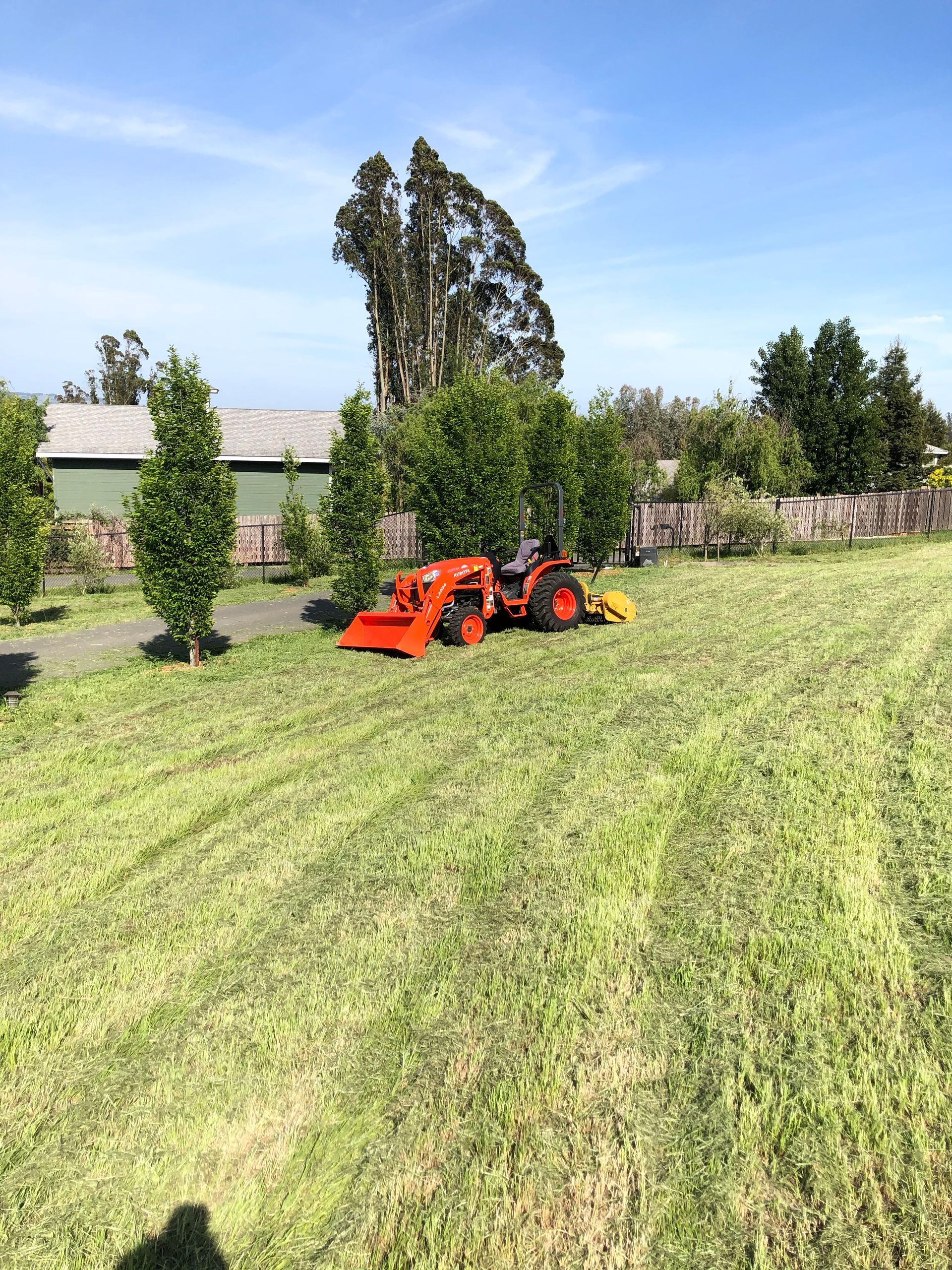
How Weed Clearing Addresses Fire and Access Concerns
The process begins with site evaluation to identify hidden hazards like rocks, stumps, or abandoned materials that could damage equipment or become projectiles during cutting. Mowing height is set based on intended use—higher cuts for basic fire break establishment, lower cuts when preparing land for construction or replanting.
Once cutting is complete, you'll see cleared sight lines across the property, exposed fence lines and boundary markers, and removal of the continuous fuel load that allows fire to spread rapidly during dry months. Previously inaccessible areas become walkable, which also allows inspection of infrastructure like wells, septic components, or irrigation lines that may have been obscured for years.
Cut material is typically left distributed across the site to decompose unless removal is required by local ordinance or fire marshal directive. Properties with recurring weed problems benefit from follow-up mowing timed to stress regrowth before seed set, reducing the viable seed bank over successive seasons.
Answers to Frequent Service Questions
Property owners with overgrown land often ask about equipment capabilities, timing for fire season compliance, and what happens to cut material after mowing.
What type of vegetation can high weed mowing handle?
Equipment cuts through dry annual grasses, thistles, fennel, blackberry canes up to moderate diameter, and mixed brush, though extremely dense woody growth or trees require different removal methods.
When is the best time to clear overgrown properties in Santa Rosa?
Mowing is most effective after vegetation has dried in late spring or early summer, which reduces regrowth vigor and meets fire prevention deadlines typically enforced before July in Sonoma County.
How low will the mowing cut the weeds?
Cutting height is adjustable but typically ranges from four to six inches on rough terrain to avoid scalping uneven ground or damaging equipment on hidden obstacles.
What should I do if the property has hidden debris or old fencing?
Walk the property beforehand if possible and mark known hazards with flags, though experienced operators also watch for surface irregularities and stop to clear obstacles as they're discovered during work.
Will one mowing session solve the weed problem permanently?
A single mowing reduces immediate fire risk and restores access, but perennial weeds and grasses will regrow from root systems, making follow-up treatment or repeated mowing necessary for long-term control.
Brodie Castle Landcare responds quickly to scheduling requests, particularly when fire season deadlines or property sale timelines require fast turnaround. Contact us for a free estimate based on your property's current condition and access limitations.